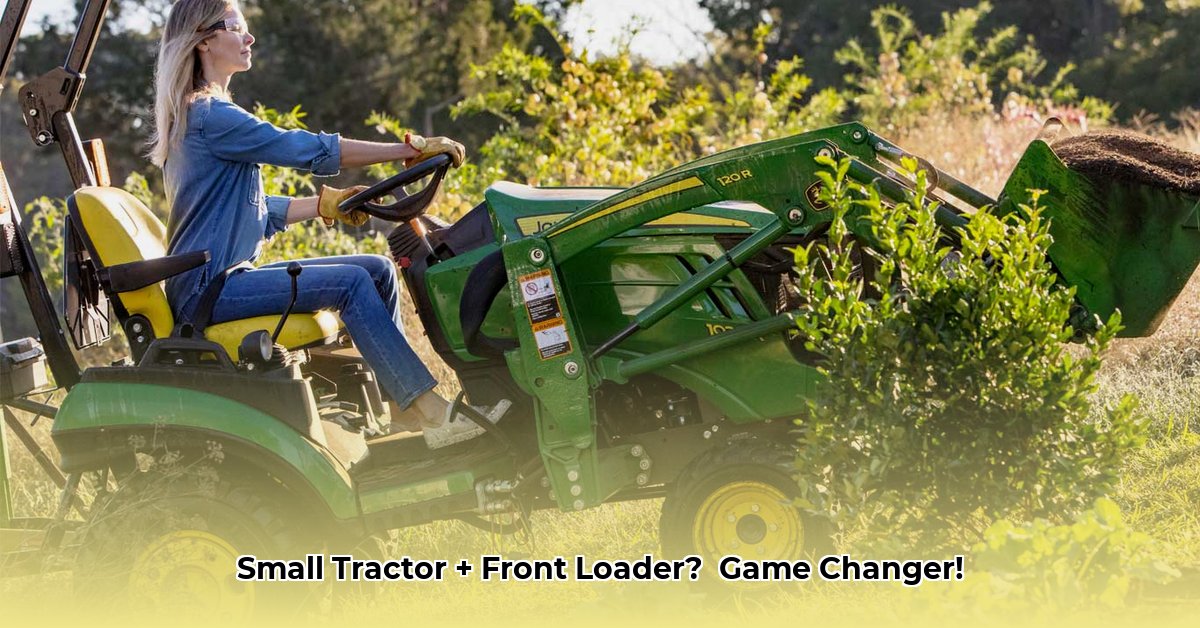
Choosing the right small garden tractor with a front loader can significantly improve efficiency and ease of work. This guide provides a structured approach to selecting the ideal tractor, considering various factors crucial for sustainable farming practices. For more powerful options, check out this Kubota Tractor resource.
Assessing Your Gardening Needs: A Crucial First Step
Before starting your search, meticulously assess your needs. Consider the following:
- Property Size: How much land needs to be managed? A smaller yard requires a compact tractor; larger areas need more powerful models.
- Task Requirements: Will the tractor be used for light tasks like moving mulch or heavy-duty jobs like tilling and earth-moving? This dictates the required horsepower and lift capacity.
- Budget: Set a realistic budget encompassing the purchase price, maintenance, fuel, and potential repairs.
Key Tractor Specifications: Power, Lifting Capacity, and Transmission
Understanding fundamental specifications is vital for making an informed decision.
Horsepower: The Engine's Strength
Horsepower (hp) directly relates to the tractor’s power. Higher horsepower is suitable for heavier tasks and larger properties. Consider the weight and type of materials you'll be moving; a heavier load necessitates higher horsepower. What tasks will require the most power, and do you anticipate needing reserve power for unexpected challenges?
Lift Capacity: The Loader's Capabilities
The front loader's lift capacity (lbs or kg) indicates the maximum weight it can lift. This is crucial for material handling. Matching the lift capacity to your heaviest load ensures efficient and safe operation. Are you anticipating transporting heavy loads of soil or other materials?
Transmission Type: Hydrostatic vs. Gear
- Hydrostatic Transmission: Offers smooth, easy control, ideal for maneuvering in tight spaces and beginner-friendly.
- Gear Transmission: Provides greater control over speed and power; more suitable for heavy workloads and experienced operators. Which transmission type better suits your skill level and the demands of your property?
Choosing the Right Size: Compact vs. Standard
Small garden tractors are available in various sizes: compact models are ideal for smaller spaces and maneuverability, while standard sizes offer more power and capacity for larger areas. Which size best aligns with the scale of your gardening operations?
Setting a Budget: A Comprehensive Approach
Establish a realistic budget encompassing not only the initial purchase price but also recurring costs such as fuel, maintenance (oil changes, filter replacements, etc.), and potential repairs. Consider financing options if needed. How will you incorporate these long-term costs into your overall budget?
Prioritizing Sustainability: Environmentally Conscious Choices
Consider the environmental impact of your tractor choice. Look for fuel-efficient models with lower emissions. Exploring biofuel options can reduce your environmental footprint. Are lower emissions and fuel efficiency high priorities in your tractor selection?
Regular Maintenance: Extending Tractor Lifespan
Regular maintenance is key to extending your tractor's life and avoiding costly repairs. Understand the frequency of required maintenance tasks. How easy will it be to obtain parts and service for your chosen tractor?
Step-by-Step Tractor Buying Plan
- Assess Needs: Thoroughly evaluate property size, tasks, and budget.
- Research Models: Explore various brands and models, comparing their specifications.
- Compare Specifications: Pay close attention to horsepower, lift capacity, and transmission type.
- Verify Sustainability: Check fuel efficiency and emission levels.
- Check Parts and Service: Investigate part availability and accessibility of service centers.
- Obtain Quotes: Contact dealers for price quotes on selected models.
- Make the Choice: Select the tractor that optimally meets your needs and budget.
- Arrange Financing (if needed): Secure necessary financing, if applicable.
- Purchase and Maintain: Purchase the tractor and establish a routine maintenance schedule.
Sample Tractor Models: A Comparative Overview
(Note: Prices are estimates and can vary; confirm prices directly with dealers.)
| Model | Horsepower | Lift Capacity (lbs) | Transmission | Approximate Price Range ($) |
|---|---|---|---|---|
| Model A | 23 | 750 | Hydrostatic | 15,000 - 20,000 |
| Model B | 23 | 750 | Hydrostatic | 16,000 - 21,000 |
| Model C | 25 | 850 | Hydrostatic | 18,000 - 23,000 |
Total Cost of Ownership: A Long-Term Perspective
Consider the total cost of ownership, including initial investment, fuel, maintenance, and potential repairs, rather than solely focusing on the purchase price. This long-term lens allows for a more accurate assessment of the financial implications of your choice. This comprehensive approach ensures sustainable farming practices are supported by sound financial management.
Key Considerations for Sustainable Tractor Ownership:
- Engine Efficiency: Fuel-efficient engines minimize operating costs and reduce environmental impact.
- Durability and Longevity: A well-built, long-lasting tractor reduces the need for frequent replacements.
- Maintenance Accessibility: Easy access to parts and straightforward maintenance reduces downtime and costs.
- Versatility: A versatile tractor with adaptable attachments minimizes the need for purchasing additional equipment.
By diligently following this guide, you can effectively navigate the selection process, choose the optimal small garden tractor with a front loader, and embark on a journey of sustainable and efficient farming.